The Readlist: November 2016

Well, this is a little embarrassing. I barely read a thing in November. The Magus (see October) had taken it out of me and I needed some time out from reading, preferably with something light whenever it came along. I opted to read my first James Bond novel and went for Goldfinger (badababdaba – he’s just the man…). I’m yet to actually finish it because it turns out Fleming’s not necessarily a great writer.

His dialogue seems fine, and once you get past the misogyny it could almost be a good book apart from the fact he can’t write the inbetweeny bits, the basics. When Fleming has to hurry a scene along and is recounting a characters movements or thoughts it’s like reading a Buzzfeed listicle and as if the sentences are refusing to flow with each other. He did this; he then did that; he then did this followed by that. It was quite painful.

There’s also a large chunk of the first third of the book dedicated to describing a golf game in great, minute detail. I skimmed most of it, as you’d imagine.

Better luck next month.

Long reads & Articles

The Grindr Killer November and early December was quite the month for dating app killers, with numerous in the news all at once. This BBC News long read recounts the events surround Stephen Port and the Met police’s failings.

Telly Traditions There’s always a fascinating disconnect on a country-by-country basis when it comes to Christmas telly traditions; the shows and films that are screened each Yuletide season. There’s Charlie Brown in America of course and the Swedish have Donald Duck. This article recounts a British TV episode which is a tradition on the continent that most Brits haven’t a clue even exists.

Linking Buzzfeed’s Composition I can guarantee that at some point this year you’ve watched a James O’Brien interview on Facebook or clicked on an article as he very calmly reasons with a bigoted caller. Given how long he’s been at LBC his sudden surge in notoriety is almost overwhelming, really. Buzzfeed take a look.


The Readlist: October 2016

The Magus by John Fowles

There was an adaptation of this on Radio 4 recently and in the run up to it the BBC publicity machine pumped out the phrase “this book will change your life!”. “Change your life?” I thought, “I can get on board with that”. And, a few months later, I took the plunge and bought myself a copy.

First things first, this novel is fairly lengthy and is up there with Fitzgerald’s Tender Is The Night for the longest book I’ve read this year. As a result, it took me a month to get through it, not helped by the fact it was a little plodding in places. The Magus is best described as Shakespeare’s The Tempest meets the film The Truman Show, as both the protagonist, Nicholas Urfe, and the reader’s perception of the world and the truth becomes ever more warped.

The Magus is all based around the idea of adventure and escaping the ennui, as a recent unfulfilled university graduate looks for life’s next big step. Urfe takes up a post teaching English at a boarding school on a Greek island and there the adventure begins as he becomes involved with a mysterious character called Conchis. Urfe’s an interesting character which is starkly apparent in the way he presents his relationship with his (now dead) parents in the opening chapters. As the book develops, it becomes clear that he is deeply flawed but I’d argue that he is no more flawed in terms of characteristics than the average person. There’s a comment made towards the end that he’d make a dreadful husband which I found unnecessarily harsh. For some reason that struck me as one of the worst insults you could ever give someone – you are undeserving of a loving relationship.

It took me a while to get into the first half of the book. Not because it was incredibly dull but it hadn’t yet captured me. There’s so many layers to this novel and they are stripped back incredibly slowly to begin with. The second half, however, I relatively raced through as more and more layers were stripped back and the reveal of the truth become ever near. Every single notion that you think to be true about the island and the characters during this novel will be turned on its head as you continue reading, and within the space of a few pages, turned again. In essence, you can’t trust anybody. The weird thing about this is that it didn’t give a sense of listlessness to the novel. As a reader you’re very aware that everything you’re reading in the middle of the book (and everything previously) is probably untrue and no longer relevant, and are also aware that the next few chapters will be the same, but you keep on going. With a murder mystery broadly a lot of what you read going through it may be untrue or irrelevant and it’s the little details from across the book that come together at the end to form the satisfying conclusion. The Magus isn’t like that, the clues to the truth aren’t presented throughout but it doesn’t feel any less worthy as a result.

The ending is an interesting one because, having read the whole novel, there’s no way you can’t place yourself in Urfe’s shoes and make the final decision for him. It’s not a matter of life and death but after everything he’s gone through, has he got anything left to lose? Should he protect himself from more pain? What’s the endgame? Is the game still being played? Could, looking back on everything that has been revealed, the entire process be viewed as abject cruelty? Will Urfe in some way be permanently mentally affected as a result of his experiences? Can he ever trust anyone again?

The Magus isn’t poorly written; Fowles has a real way with description throughout (some sections are very heavy on it though) and some lines just leap out at you. The one that stuck with me was the description of a noise heard during the night, and is as follows:

There was a strange call from the dark trees to the east of the house. I had heard it in the evenings at school, and at first thought it made by some moronic village boy. It was very high-pitched, repeated at intervals: Kew, Kew, Kew. Like a melancholy, trans-migrated bus conductor.

The novel is set and written post WWII so as you’d imagine this does feature, particularly in the second half. It isn’t done gratuitously though; it does seem relevant to the book’s themes.

Enjoyable? Vaguely. It certainly felt colossus but I’d still recommend it to people. And based on Woody Allen’s famous quotation I think I’ll give the film adaptation a miss.

Long Reads & Articles

Retrospective Friendships are a bizarre thing. To make new friends there’s an assumption that you must have great swathes in common but life doesn’t work like that. Friendships come about through shared experience and circumstance more than anything else. I’m too young to truly look back on friendships retrospectively but this is a lovely essay on two people’s kinship.

Have you ever, ever felt like this? Paul Jennings was a big part of my life growing up even though I was a child of the 00s. Round The Twist was repeated frequently and I read a lot of his books complete with their numerous cum-wanking-wet dream references (probably a little to early to be honest) and yet somehow, so many people are unaware of him and how huge he is in Oz.

Wither On The Vine The weird thing about our new digital age is how companies, websites and social networks can grow, blossom and die all within a few years. Here’s the story of what destroyed Vine… Here’s the story of what destroyed Vine… Here’s the story of what destroyed Vine… Here’s the story of what destroyed Vine… (ahahaha)

The Readlist: September 2016

Buried For Pleasure by Edmund Crispin

Another Gervase Fen book for me this month. They’re so easy to pick up, get sucked into and are utterly joyous to read as I’ve explained in previous posts. This one revolves around Fen standing for Parliament in a seat that comprises of a sleepy and picturesque market town and its not so sleepy or picturesque cousins close by. And  – would you believe it – there’s a murder!

The Sisters Brothers by Patrick deWitt

I originally started this book when I was riding the crest of the eReader phenonmenom in the early part of the decade when it seemed like physical book store’s days were numbered. I didn’t actually purchase an eReader though, I used my flash new Android tablet instead and TSB had recently been released on the Google Play store (or Android store as it was back then). Alas, eReaders didn’t hook me in and even buying a Nook eighteen months later didn’t sway me any further and The Sisters Brothers continued as one of those books I’d read the first quarter of but never finished.

Then, when bobbing around Sainsbury’s, I saw the paperback for £1.99 and took the punt on it again and it became my holiday read for my mini-break to Prague. All was going well – I read it from the beginning again, I was enjoying it and then… I left the paperback on the plane! Disaster! Even more annoyingly I didn’t actually realise this until two days later. But, here’s where my younger self came to the rescue, I was able to finish the book using the digital copy which was still linked to my Google account.

This book has a great prose style. It’s presented as a first person narrative, from the mind of one of the Sisters brothers who feels a little inadequate compared to his sibling. He’s a plain thinker, and everything is no-nonsense. It might take you a while to get used to the flow of the book as a result but it’s a real unusual pleasure to read. The story sees the brothers sent on an assassination job during the gold-rush era in Western USA. Obviously, as you’re following smash-and-grab assassins, there’s the whole anti-hero vibe going on here but it’s clear that the narrative stems from someone who no longer wants to be in the ‘business’. He’s also more kind hearted than his brother and this is seen through the bits and pieces involving horses. A film’s been in the works for a while and should be in cinemas next year.

Interestingly, the plane I caught back to the UK was the exact same one I had taken to get to Prague… and I was seated in the *same row* as the one I had been in when I left Blighty, and thus the same one I left my book behind in. Alas, the book had disappeared but imagine the bizarre sense of hope I got staring out of the terminal windows when I saw the plane appear!

Articles & Long Reads

The Only Plane In The Sky This article was widely shared in the days immediately following the 9/11 anniversary. It’s an oral history, an article transcript, of those surrounding the President on that fateful day back in 2001 and the decisions that were made. The startlingly thing is, as we now live in an age of wi-fi on planes, how little they actually knew when they were aboard Air Force One.

Trapped With 9/11 there are so many individual stories from one event, so many perspectives you can view it from. From people pretending to have been there and to have survived the atrocity to the story of the Marriott hotel next to the towers… I had a sudden all encompassing thought during the anniversary. What about the elevators? Two massive skyscrapers must have had hundreds of people in elevators (North more than South though, for obvious reasons) at the time the planes crashed. What happened to them? Did any escape? Or were they just trapped, completely unaware of events unfolding around them? This article goes some way to answering this.

In store grooves Do you ever find yourself bopping along to some tunes in the aisles? Most shops just have a playlist sent to them but others have to connect to a stream over the speakers. ASDA FM live (the most heard radio station in the UK – more than Radio 2!), The Co-operative Radio, Daily Mail News Shop Radio (no idea if that one’s still going), GAME Store Live to name but a few in the UK. This looks at the biggest in Australia. In reality, I’d say instore radio often have a better music mix than most radio stations on the dial and I’ve always found Morrisons’ mix of Britpop and 00s second singles to be very enjoyable. Interestingly, Chris Moyles career started off as a disc jockey for the Topman in store radio in London, which was literally a booth in the middle of the shop. I imagine these days they’re proper DJ decks rather than a ‘studio’.

The Readlist: August 2016

I’m Not With The Band by Sylvia Patterson

I read a lot of good reviews and interviews in the press about this book and was looking forward to it. Surprisingly though, given the way it was being promoted in the media, it was incredibly difficult to actually go into a book store and buy it.im-not-with-the-band-final Nobody was stocking it and I had to resort to actually ordering it in.
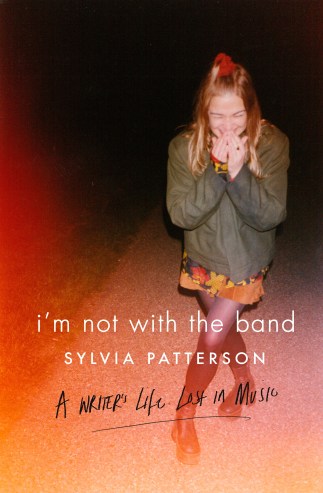
Headline wise for this book, I found it a little disappointing. I think I was expecting it to be more like Mark Frith’s excellent memoir of his time as editor of heat magazine, The Celebrity Diaries, which is witty, interesting (even a page-turner?) and full of anecdotes. Patterson I think tries to achieve this but doesn’t quite get there. If anything it’s more of a personal memoir than explicitly a firsthand exploration of the world of pop music journalism from the 80s to now, which is what I was hoping for. I don’t begrudge her including swathes on her personal life, the relationship she had with her parents, her boyfriends and flatmates or her drug use but I felt a little cheated in retrospect. It got to the stage where I was thinking “oof, I should really pick that up again and get another chapter out the way” rather than me actually wanting and looking forward to reading it.

Truth be told, writing this a few weeks after reading it, there’s very little of her showbiz anecdotes that I remember. There was tales of her conversations with Prince (by far the most interesting thing in the book), Madonna and Westlife but even then it feels like you’re reading the exact same interview that would have been published at the time with the occasional side swipe thrown in. I don’t feel like I got to experience anything new or see these huge superstars from a different perspective. A shame really. Danny Baker’s first autobiography, which I read earlier in the year, seems to have a better and more amusing ability to balance personal life stories with celebrity interaction.

Holding The Man by Timothy Conigrave

For a book which is held in such high esteem over in Australia, its country of origin, I was surprised by how few people are aware of its existence over here and how difficult it was to buy a copy this side of the world even though it’s been turned into a very famous play. I ended up getting it shipped to me direct from Aus in part because, I think for the first time in the history of the world, the movie tie-in cover was actually more attractive and better than the original cover. By happy coincidence the film was also added to Netflix UK recently so I set out to read the book first and then watch the film. More on my experience of that in September’s watchlist.

This is another memoir and you’re aware of where it’s headed before it’s even started. Both the author and his boyfriend died of HIV and AIDs related illnesses with Conigrave only finishing the book mere days before he himself died. Exploring his life in the first person from around the age of nine, he revisits his time in a staunchly Catholic boys school and how he grew up and discovered himself and all the usual gubbins. There was a period in my life when I feel like I watched about a billion coming-of-age films as some kind of antidote for the fact I was failing to come-of-age myself. I was just kind of bumbling on, getting older but not feeling like I was having any new experiences first hand. It’s actually only now, having left home, that those cogs are beginning to turn and I feel like I am indeed ‘living’.

Anyway, that aside, it was refreshing to read a gay coming of age story. The book is, dare I say, quite filthy in the first half. There’s a lot of sex scenes, some based with boys at school and others (eventually) with his lover John Caleo. I won’t lie and say these weren’t enjoyable but there’s a very sharp change in feel from being carefree and sexual in the first section to the second half of the book when things begin to come to a painful head. One of the most fascinating things for me is that although Conigrave grew up in a Catholic school in the 60s/70s Conigrave had numerous gay experiences seemingly very easily and was actually surrounded by a surprising number of gay men. Even some of the teachers/priests at the school were out as homosexual (admittedly ‘celibate’). There was still the expected homophobia from some however, notably John’s parents.

Conigrave is clearly a very flawed person and has different ideals from his partner John. Reading the book, I think in retrospect he realises his flaws and in part apologises for them. His adultery is the stand out one but Conigrave is also quite a selfish person. Not hugely at the expense of others but it’s clear he doesn’t consider other people’s feelings until after his own – he nearly announced he was HIV+ at his sister’s wedding for example. An important book? Definitely. It’s a really solid look back at the gay plague and its spread in the 80s. Conigrave redeems himself and his poor character by the huge amount of HIV and AIDs related outreach work he throws himself into at the time, and this is probably a defined turning point in him as a person.

This is a book that I can guarantee I will return to and read again at some point in the next eighteen months. Indeed, this was the first book that I’ve picked up and read cover to cover in 24 hours since I was an early teenager. I’d forgotten what it was like just to sit and be lost in a world and a story (be it fiction or non-fiction), given how busy we all are and the working life I now lead. A must read.

Long reads & Articles

Mapping The Future For a song that was only a minor mainstream hit, its implications for op music going forward were wide-reaching and it’s still sampled today. The Yeah Yeah Yeah’s Maps and its influence is analysed in detail.

How’s the book coming along? All writers dream of writing a book. What happens when you’ve got the time and a great idea? An honest reflection on the process and how your enthusiasm for your own project can wane.

Face Up To The Facts Some people have better facial recognition than others – that’s just a fact. Indeed, there’s a known medical diagnosis for those who struggle to place faces called prosopagnosia. This explores the opposite side of the spectrum and how people with amazing facial memories are helping the police catch criminals often long after the case was opened.

Sexty Miles An Hour I grew up in a town that sat adjacent to the A1 so sex-shops were continually there in my conscience as a child. In fact, one exists near Grantham on the site of a former McDonalds and I imagine (having never been in since) that there’s a rack of dildos next to where I used to enjoy a Happy Meal…now they’re spreading happiness of a different kind. This Vice article explores them.

Harder, better, faster, stronger! With the ‘limpics this month, the New York Times created five explorations of what makes some athletes at the top of their game quite so special. There’s five in total and it combines text with diagrams, videos and interaction.

Droning On Drones for military setting seemed to have passed into the public consciousness as acceptable; we are now unquestioning as to whether they’re morally right or not. But if the technology exists for the ‘good guys’ then surely when you flip it on its head then there’s a whole load of evil they can do… how do we stop the killer robots?

 

The Readlist: July 2016

Ooh, what a treat this month was. I finally got my hand on a book I’ve wanted for ages…

Me & Murder, She Wrote by Peter S Fischer

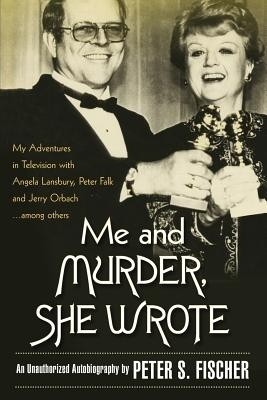
me-and-murder-she-wrote-400x400-imadq2ayxnaq3njeFor anybody who has seen any episode of MSW the name ‘Peter S Fischer’ should be familiar to you – it flashes up in the opening credits as one of the creators of the show. His memoir about his work in television had a small print run back a few years ago and as a result is incredibly difficult to get hold of. It’s become one of those books where the Amazon algorithms have taken over and the price continually spirals -asking prices for it were often well over £150. I checked back occasionally and on one occasion was lucky enough to find one had recently been put up from a UK seller for £12.99 plus P+P. A bargain in comparison!

To be honest, the book is  little misleading. Although he is most well known for Murder, She Wrote the book doesn’t focus on this nearly as much as the title would have you believe. He starts it ‘in media res’ with a meeting between himself and Angela “call me Angie” Lansbury and then starts from the beginning of his life. Yes, it is fascinating, but some bits do drag a little and I think it’d be fair to say some sections could have been written a little better. I feel like I’ve committed some sacrilege by criticising a famous TV writer’s work, but truth hurts! (I also appreciate it’s a bit pot, kettle, black in terms of this blog’s terrible excuse for writing and punditry)

The memoir also acts as a window into a different world of US network television, back in the 70s and 80s when you had made for TV movies all over the place and where certain programmes can live and die by their time slot. Indeed, Fischer was aghast when network execs wanted to put Murder, She Wrote on Sunday evenings, a slot that was famously dull and quiet. However, it was a great success and stayed there for eleven seasons – when there’s nothing good up against it, people flocked to it as a result. Then for season 12 (the final one) it was moved to Thursday evenings up against some comedy or other called ‘Friends’. Viewing plummeted, the show was canned and never had a proper finale. Of course that hurts, but S12 of MSW was a far cry from earlier seasons and its time had come.

Fischer isn’t all about MSW though – after some breakthrough TV movies he worked on Columbo (the good 70s stuff) and also one of the most well remembered TV series of its time, Black Beauty, writing every episode. I should probably clarify at this point that he had nothing to do with the Mrs Columbo spin-off, which he regales the history of in the book to much amusement. Poor Kate Mulgrew, hey? Likewise, however, his very own MSW spin-off (which many people still don’t know exists) didn’t work either – The Law And Harry McGraw was placed in the wrong time slot and fell at the first hurdle.

Some of the book does fly straight over my head. There’s a lot of mentions of famous Hollywood actors and the huge honour it was working with them, and the A listers they managed to get for MSW episodes but the names mean nothing to me. They’re from a bygone era and many of them have now “passed on”.

This is a decent read for those interested in the media industry and its history and likewise for fans of the show too. I was eager to read Fischer’s take on all the internal politics of Murder, She Wrote and whether he blamed Lansbury for anything (notably, there were issues with S6 where half the episodes didn’t really feature Jessica at all and were just mysteries, both S5 & S7 were nearly the final series and from S8 Fischer left the show as Lansbury wanted it to take a different direction and wanted artistic control) but he was incredibly nice about it all and there were no harsh words. I was a *little* disappointed there to be honest.

Bonkers by Jennifer Saunders (audiobook)

There was a big change in my life circumstances this month, so I was a little all over the place and trying to get settled so turned to an Audiobook for the first time in my life. I opted for an autobiography and, completely at random, plumped for Jennifer Saunders. I’m in no way her biggest fan and have barely seen any of her work – French & Saunders was no longer on TV when I was past kids-stuff, and the clips of Absolutely Fabulous didn’t massively interest me and yet, she’s somehow this cultural icon in my eyes. She was quite fabulous as the fairy godmother in Shrek 2, it has to be said, and her version of Holding Out For A Hero is class-A.

It was a nice listen – nothing too demanding, not massively compelling either but I got through it, bumbling away in the background during car journeys. Were there any amazing zinger anecdotes? Nope. Was I expecting it to be a little funnier? Yes. Was I disappointed in it though? Not massively. She came across as human and unfazed by fame so that’s a tick from me. I also was completely unaware about her battle with breast cancer so that was an interesting section.

I’ve got another couple of Audible tokens to use and I haven’t been scared off audiobooks yet, so we shall see what’s next…

Articles & Long Reads

ONM! As a kid in that odd stage between being a proper child (under 8) and a teen (13+) I was obsessed by Nintendo. I didn’t own a Wii or a GameCube but the idea of doing so obsessed me and I read the pages of the Official Nintendo Magazine with fascination. It was witty, it was irreverent, it was sarcastic and I loved it – it probably helped shape my personality to be honest. Indeed, I once got a tweet published in it! What a moment that was for me. It was pre-Twitter ubiquity though so no one was particularly impressed. This is a nice look back at the mag and all it stood for (it ceased to be a few years ago, alongside Nintendo’s slide in popularity).

The Readlist: June 2016

One word for you this month: disappointment. With the vast majority of books (we’re talking 99%) I will always keep them after reading them even though the space to store them is somewhat lacking. I always feel like finishing that book is a little achievement, a tick against your existence and should be added to your bookshelf as a display of your personality. Both books I read this month I immediately donated to charity shops when I finished them which should show how much I hated them.

The Shining Girls by Lauren Beukes

I’d been sitting on this book for a while and according to the receipt I found within its pages, I’d been in possession of it since summer 2013. The premise had intrigued me. At that time I read a lot of crime fiction and a plot revolving around a time-travelling serial killer sounded very original and it’d had some good reviews. Sadly, mine won’t be joining them.

With any thriller or crime novel the real aim is to make it into a page turner – a plot deep enough and interesting enough with strong characters that keeps you coming back for more. The Shining Girls fails spectacularly because its timeline fails to make it coherent enough to be a un-put-a-downable read. Obviously this was always going to be a struggle with a time travelling serial killer, but too many time jumps are placed at seemingly random intervals and there’s *too* many (in number) time jumps to keep you hooked. There’s two main time periods followed – those of the killer, and those of a failed former victim who’s looking for the truth. Between them there are then tens of other time frames, jumping around, with other victims and other characters appearing sporadically. Admittedly, the timeline does even out towards the final quarter of the book and my interest did pique but it was too little too late for me. An interesting concept, poorly delivered.

The Girl On The Train by Paula Hawkins

Oh, look what it is! Clearly, I’m very #mainstream this month and finally got round to reading one of the hot books from the past few years (we can thank a charity book stall for this, picked it up in hardback for £1!). It’s the classic premise here that Agatha Christie made famous (she was quite obsessed with trains in hindsight, which reminds me of this great Grandma’s House moment), seeing something through the windows on a train.

The protagonist here is deeply flawed, something we learn in great detail as her life story unravels alongside those of the other characters. In essence, she sees this perfect couple from her train window everyday and then *bam* she’s sees the woman kissing another man who isn’t her boyfriend. The rest of the plot spirals from there.

It’s time for my admissions: I have a deep rooted hatred for novels told in a diary format which aren’t really diaries at all. I can cope with a diary as long as its done properly but this purely used the format so it can avoid creating a tangible story thread and timeframe and easily switch between different characters. In my eyes this is lazy. Listing a date and either morning/afternoon/evening and then having the character’s internal monologue would be fine but it strays from this. It’s not a diary in the classic sense, its presented as what that character’s thinking at that time, and yet, half the time, is presented as if the events are happening in real time. Make your mind up! Is it a diary? A first person narrative? What do you want it to be?

My other issue is that it’s deathly boring and entirely predictable. Oh, look, a person just so happens to be unable to remember the events of the night when it all happened and she’s the only real witness! The characters aren’t as well layered as the author would have you believe; there’s no real nuances to them other than ‘the alcoholic’, ‘the lonely one’, ‘the paranoid one’ etc. And then BAM everything you thought all along and predicted happens at the end anyway, as the big reveal. With a small number of characters the shock factor really isn’t there when it comes to the BIG ending. With a classic murder mystery, say, the small number of characters and motives that each had keeps everything spinning until the end before the climax and everyone shuffles into a room and you’re told who the real killer is. Here, the list of characters is small to begin with and the actual list of suspects is incredibly small – yet, somehow, the book is dragged out to be far longer than it needs to be because there’s a lot of dicking about (not literally).

A film’s due for release later this year so we shall see how that does…

Long Reads & Articles

Neu Jorker I subscribed to the New Yorker for the first time this year having read it online for a few years. Here, the team behind The Onion and the excellent ClickHole have done an *amazing* spoof of the New Yorker, right down to the letters and adverts. It’s the length of an entire magazine! Superb.

Clark Home Counties 1986 saw an interesting addition to the Superman franchise with an incredibly low budget film from a very low budget company. So low budget in fact that they used Milton Keynes to film as New York. This a look around the locations and film’s failure.