The Readlist: May 2016

I’ve been a little bit busier this month than usual so haven’t read as heavily, meaning there’s only really one thing worth telling you about…

Going To Sea In A Sieve by Danny Baker

I feel like Danny Baker is a name very familiar to people over 35 (to the point when some people basically worship at his feet) but with me he’s a man I’ve barely come across. I’m aware of his work but have never really listened to him, wasn’t around in the heyday of the 90s when he was at his peak and of course never watched him on his plethora of TV shows. In short, my introduction to Danny Baker has purely been through word of mouth and Cradle To The Grave, last year’s BBC Two sitcom. On a whim I purchased his first autobiography (the basis for the sitcom) having heard good things and I am incredibly glad I did. It is, hands down, one of the best autobiographies I’ve ever read.

It feels a bit odd to type the sentence ‘Danny Baker is a great, witty writer’ because I feel like I’m a guy late to the party who’s stating the obvious. He is though, capisce? Danny holds no qualms in not being massively modest or self deprecating, he knows he’s good at his job but has never forgotten where he came from. Going To Sea In A Sieve follows his early life in a council flat in 1970s East London and his adventures post school. He had so many adventures, so many jobs and met so many people in such a short space of time that I was around 70% of the way through the book when he suddenly mentioned his age again and was momentarily stunned: the events he details all happened pre-21! What a life to lead for a teenager and a far cry from the very life I am leading now, in a cul-de-sac in a sleepy market town.

dannybaker-1200x750

I appreciate you could always say “it’s your own fault if you’re not living a full life” and I can see your argument but with Danny he just happened to be living through his teen years in London. As a result at the time he didn’t appreciate how in the midst of cultural history he was. The number of famous musicians he met as they were climbing the ladder, the amount of incredibly rare vinyl records he came into contact with worth thousands of pounds now and the situations he found himself in. But, I suppose, that’s life really – you’re never truly aware of the good times you’re having until after the event.

This is an astonishing book and one I heartily recommend to everybody – I’ve read some really poor media showbiz autobiographies in my time (*cough* Scott Mills) but this incredible. I both want to read the second book, Going Off Alarming, immediately and also desperately want to save it as a treat for the future me after having read some terrible books.

Long reads and articles

The 96 A personal look at the Hillsborough disaster and it’s wider implications in British history

What Are The Odds? Betting shops are incredibly prevalent on British high streets, often with the same company have numerous branches within spitting distance of each other due to gambling machine regulation. Rather than focussing on the customers this focuses on the overworked staff and the fatal consequences of company expansion and cost cutting.

Cbeebies A God-send for parents, this is a look behind the polka dot curtain of Britain’s most loved TV channel.

oOooOOOooo A look at the hidden profession from the perspective of someone who does it for a living – ghostwriting.

It’s Britney, bitch A public meltdown and a Las vegas residency: those are the headlines of the last decade but is she ready to reclaim her life for herself?

Obamagraph The white House’s chief photographer on life with Obama and life through the lens

Sykeidelic Even with the might of Global behind him, Nathan Sykes has still struggled to forge a tangible career of his own and still lives in the shadow of his former boyband. This is his story of the transformation from 1 of 5 to 1 of 1.

Slave A better life in Scotland?


The Watchlist: May 2016

Back again and a distinct lack of films this month compared to April…

Films

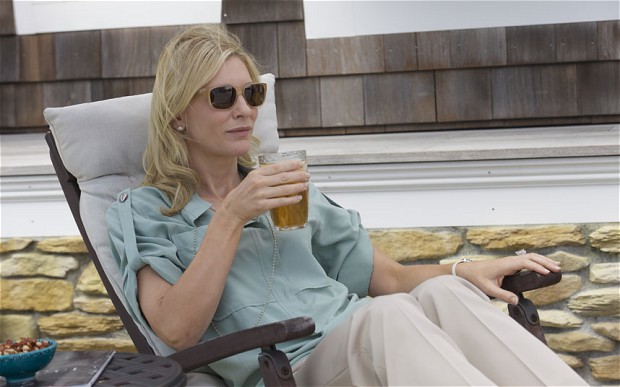
Blue Jasmine

My English teacher back in A Level tried to convince us to watch this due to its striking similarities to A Streetcar Named Desire, one of our exam texts. It’s clear to see that those links run deep here with former socialite Jasmine rocking up at her working class sisters having lost everything, and suffering from the same kind of mental health issues as Blanche Dubois. Shockingly, for someone who’s arty and liberal, this is the first Woody Allen film I’ve ever seen and in all honesty probably isn’t the best one to choose as an introduction to his work. I mean, that wasn’t my aim watching this, it just ended up that way so I will try and dive into some more Allen as the year progresses. A solid film but nothing special – it basically asks the age old film questions, “who do you want to be?” and “what is happiness?” in a slightly more contemporary way.

bluejasmine_2675152b

Mermaids

Cher and Cher alike! I worked out that she would have been in her mid-40s when this was filmed and released which was very surprising to me. She turned 70 this year! Unbelievable. Anyway, this is the first film I’ve watched Cher in and that was undoubtedly my main draw to this. She plays a single mother constantly running away from her mistakes, upping sticks and dragging her two children half way across the country in the process. Cher’s strong, as are the child actors featured too but that can’t distract from how dull, unnecessarily slow and heavy the plot can feel. Extra time in the edit suite and a good portion could be done away with easily to give it a more rounded, pacier feel. It hasn’t scared me off Cher films forever but I was largely unimpressed.

Television

Storyville

  • Dance With A Serial Killer
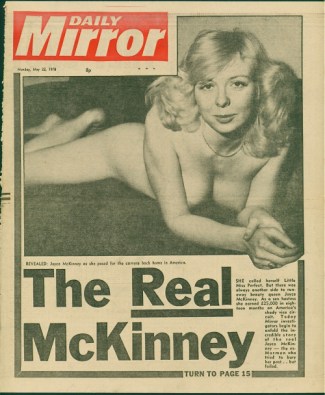
  • Tabloid: Sex In Chains

I find it very easy when watching things on demand to immediately reach for a box set drama or comedy rather than a documentary, possibly because they’re not as prominent in search or they’re spoken of less on social media. With iPlayer there’s often swathes of archive documentaries available to view, in part due to the fact a lot of them are shown as filler at 2am on BBC Four and are automatically added to the service. I watched a lot of Storyville and Timeshift documentaries as a teenager without Netflitumblr_ltqfcbc0lw1r2jvaoo1_500x so it was nice to leap back into bed with a few Storyville documentaries.

The first I watched this month traces a French investigator following his gut instinct to apprehend a serial killer; the second is about a woman I had no idea existed but those over 50+ almost certainly will. Model Joyce McKinney became obsessed with her Mormon boyfriend and tried to kidnap him, tying him up in a Dorset cottage and sleeping with him continuously. It became a tabloid sensation as you’d imagine. The interesting thing with Storyville is that the documentaries never have a format – they’re all individual, different lengths and often co-produced with other countries’ broadcasters. Tabloid: Sex In Chains is presented as a talking head docu, tracing Joyce’s life. The mormon neglected to be part of the documentary but his side of the story is explored and journalists who worked on the story at the time also feature. There’s also a fascinating insight into her life post-media sensation; she never found love and tried to live her life in solitude as much as possible. Her life takes an almost sad turn towards the end of the documentary with events involving cloned dogs and all sorts. Bizarre but fascinating.

Blue Eyes

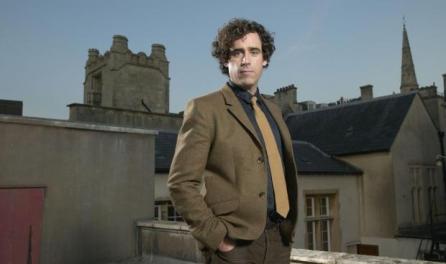
This has been a fairly strong Scandi-noir drama which made a conscious effort to be relevant to the current political happenings in Europe with the rise of the far-right in many countries, including our own. The final few episodes of this are very explosive, however, the political aftermath itself (politics and terrorism run concurrently through the show) is a little difficult to follow. The finale comes to a head on election night with all political factions  continuing to fight, shown in the last twenty minutes of this in a rather rushed fashion leaving it all a bit openended. It looks highly unlikely there’s to be a second series but at least we met lovely Simon though, eh?

cunkos-01Cunk on Shakespeare

If you’re not aware of Philomena Cunk I demand you get on YouTube immediately. A feature of Charlie Brooker’s Wipe series, this was Diane Morgan’s first standalone programme as the character. Her self serious narration and interview techniques are some of the funniest things on television these days and it’d be great if the BBC viewed this as a pilot and greenlit some more episodes. An interesting look at how they made the programme was posted online: in essence, it’s all improvised and they’ve got enough material left over to sink a battleship.

Grace And Frankie

I adored the first series and rejoined Netflix (I took a break back in February) to watch Season 2. In all honesty, I’d forgotten about the entire dynamic behind the show beyond Grace, Frankie and the ex-husbands so the way it gently reintroduced the children (oh them! etc.) and beauty business (oh that! etc) was appreciated. It continued in the same vein as S1 and didn’t try to reinvent itself, continuing to be gently funny and feature a healthy amount of the ever affable Lily Tomlin with her frankly glorious bright eyed smile. This isn’t a laugh a second network comedy, it’s more deep than that but it does contain some fabulous lines. As always it’s great to see older woman portrayed on screen as something other than doddery old fools or bit part players – G&F is about them and proudly so, and isn’t afraid to talk about sex for older generations either (yam lube!)

05frankie1-master768

Unbreakable Kimmy Schmidt

This seems to be real marmite comedy over on Twitter – for every person who loves this there’s another who detests it and was never able to get into it. Season 1 had a strong start but some incredibly weak episodes and a overall poor second half even with Jon Hamm and Tina Fey in it.* Thankfully this sustains a decent level throughout and contains the occasional killer line that Tina Fey and the team of the writers are all known for through 30 Rock. It’s nice to see Tobias’ character develop but I still really struggle to appreciate Lillian as a character though – I find she’s too often the same joke or plot device regurgitated in each episode.

*as an aside, having now seen the OJ Simpson drama earlier in the year I now understand that Tina Fey’s lawyer character was a direct parody of Marcia Clark!

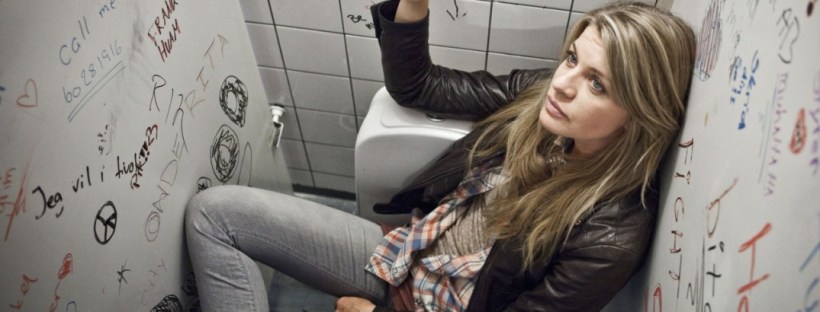
Rita S3

I think I’m right in thinking S3 was a Netflix co-production, having proved popular on the streaming service but initially canned by its original network. A lot has changed in Rita’s life – she’s newly single and son Jeppe has moved out which means she’s now alone in her house, rattling around. Episode 2 really highlights this beautifully and the worries that Rita has now she’s single and alone. An elderly spinster teacher who has taught at the school since forever dies suddenly and staff membdownloaders struggle to write a eulogy for her: it turns out nobody really knew her. The end of episode where former pupils attend her funeral and sing her praises cements to Rita that she has had an impact on people’s lives and will be remembered regardless what happens. Rita is also (in true Rita fashion) on a one woman crusade to change the school for the better and ensure those who need extra help get it.

This is the final series of the show, sadly, but I’ve really enjoyed watching it over the past year. A nice soft drama with really great comic moments which doesn’t stick to stereotypes to portray characters. Of course, having a young gay character in Jeppe helps too!

Going Forward

A spin off the darkly funny Getting On set in an NHS hospital, Going Forward sees Jo Brand return without Vicki Pepperdine and Joanna Scanlan. As far as I understand, Brand wasn’t interested in doing the show in America and left them to their own devices and decided to nurse this baby (no pun intended) herself. For the first time we see Kim Wilde’s family (her husband is Omid Djalili) and her new role working for a private home help firm but still under the strain she was before as she tries to help others on a limited budget and with considerable time constraints. The series is largely improvised, which, although impressive, is probably its downfall and led to quite a few scenes feeling like repeats of those from a previous episode (notably those inside the taxi). It could be tighter and it could be funnier but that’s not to say it wasn’t good, although it did fall into the trap of introducing a TV trope in the form of the slightly scatty Aunt. Overall a solid 6/10 and a welcome return for Hillary at the end rounded it off!

The Readlist: April 2016

The Man In The High Castle by Philip K. Dick

71ts-gujujl-_sl1171_I watched the first episode of the Amazon Prime adaptation and thought to myself “no, stop!” and decided to read the book first instead. Alternative history is a genre that’s always fascinated me but I’ve never taken the plunge and read one, probably due to the fact I feel like I need a certain base level knowledge of a certain event/period before I can and, even though I have a History A Level, I felt I was probably lacking the prerequisite.

TMITHC is based around the notion of the Nazis and Japan winning WWII and it’s startling to think that this book was written just fifteen years after VE Day. Imagine George Orwell’s 1984 meets Joseph Heller’s Catch 22 and The Wizard Of Oz and you’re kind of there with this book . It focuses on individual characters and their first person narratives, all of which overlap in the end (and most notably one American-born character is so keen to curry the favour of the Japanese now living in San Fransico and as his leaders that he thinks like them), and the search for ‘The Man In The High Castle’ who has written  a piece of literature where the Allies win the war instead. I can understand that some may find this novel ever so slightly confusing (once you’ve read Catch 22 I think you become open to anything) and certain parts need a bit of a run-up but I thoroughly enjoyed it.

I found this novel incredibly refreshing in its portrayal of a WWII result turned on its head for one reason: the Nazis aren’t the focus. Being in Europe our entire notion of WWII is the Nazis, Hitler and their rise and fall from power. Philip K Dick, as an American writer, focuses primarily on Japan and their takeover of the West coast of the USA (the country has been split in three, with the West given to the Japanese, the East to the Nazis and a no-man’s land created in the middle). America obviously has more of a focus on Japan given the events of Pearl Harbour, but as a European I found it very refreshing to read it without the Nazis being a key focus. They do lurk in the background and aren’t totally ignored as most of the characters are in two minds as to whether they are in fact better off under the Japanese rule or whether they would prefer to be on the East coast with the innovations of the Nazis, but it’s made clear that both sides have taken very different routes since WWII. There’s also the constant fear of Jews being discovered and sent to new concentration camps which have been set up near New York.

TMITHC also introduced me to my new favourite phrase, ‘a pot pourri of pointlessness’, which went straight in my Twitter bio.

Swan Song by Edmund Crispin

I took a punt a while ago and bought a set of Gervase Fen novels and it’s one of the best decisions I’ve made – they’re joyous. Focusing on an amateur detective/university don, the erudite but lumbering Fen, they’re set in and around wartime Oxford. I’ve read four of the novels so far and aside from one which involves government spies in its plot, the war itself is barely mentioned – it just so happens that they were written as being set in the present and at the time a war was on, rarely being used as a direct plot device.

Crispin keeps the time periods in each novel brief – the goings on rarely happen over a period of time longer than week and during one book, The Moving Toyshop, the plot is wrapped up in just over 24 hours. These books are witty, clever and knowing, occasionally breaking the fourth wall with a glorious knowing wink, far more obtuse than Christie’s inclusion of Ariadne Oliver but better for it.

I wouldn’t say this is my favourite Fen novel but it’s certainly enjoyable and the payoff at the end is incredibly clever. These books are hugely satisfying and great fun to read – you’ll love them if you like a classic murder mystery, and (dare I say it) are far more fun than anything Agatha Christie of Dorothy L Sayers ever wrote.

Long reads & articles

I ❤ Jackie Tyler As a Doctor Who loving pre-teen, a magazine created precisely for my audience was a Godsend and I have fond memories of reading Doctor Who Adventures. The inclusion of a pocket FM radio as a free gift meant so much to me as a radio obsessed child, too! One of the team members involved with its launch looks back on ten glorious years. I even remember some of the page spreads included in the post!

Marcia With The People vs. OJ Simpson finishing, here’s a great interview with Marcia Clark.

Top Of The Nots Peter Robinson on the moments in pop music that *almost* happened.

Monica Jon Ronson revisits Monica Lewinsky from the perspective of his hit book, So You’ve Been Publicly Shamed?

All Fun & Games How Hasbro exploited the Magdalene women

Achoo! What happens when your video goes viral?

Shitpic Ever wondered why so many viral pictures and memes shared on Facebook and Twitter look like they’ve been faxed in and photocopied on a printer with little ink left? This is why.

The Readlist: March 2016

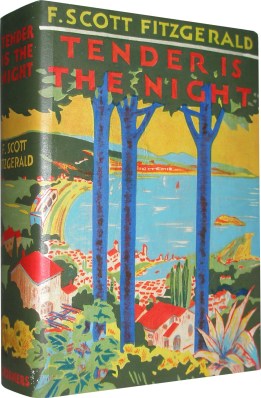
Tender Is The Night by F. Scott Fitzgerald

My only exposure to Fitzgerald was studying The Great Gatsby at GCSE. I had purchased a couple of his books in a set at a discount at one point, and this is the first one I’ve gotten round to reading. This particular novel comes some twelve years after Gatsby and is viewed as semi-autobiographical, with parallels to his relationship with Zelda.

Tender Is The Night is at points difficult to follow, with so many characters already in play at the beginning I had no idea who anyone was between readings, or their relevance. To be honest I’m not entirely sure Fitzgerald did either. Eventually the number of characters is whittled down and the majority of the book deals with Dick, his wife Nicole and Rosemary’s influence.
tumblr_m5zd8qXl0Q1rrnekqo1_1280.jpgThe time frame jumps around a fair bit and its only deep into reading a chapter that this becomes clear. Equally, many scenes are over written. Fitzgerald is a master of description but there’s often a lot of fluff too. Yet, his presentation of people is second to none. They are presented as mundane and fickle, and his understanding of the human psyche is tremendous. Fitzgerald also pinpoints the exact moments that a relationship changes or perception of people change perfectly – the one thing that causes a relationship or a friendship to change irreparably is crystal clear.

The women have character and personality and their own thoughts, although, admittedly, I’m not sure it would pass the Bechdel test. The presentation of mental illness and its understanding puts many people in the twenty first century to shame, however.

It’s a long novel, split into three books. Reading the first can seem like a drag with so much going on that seems increasingly irrelevant, but the whole things comes into its own from Book II onwards.

There’s so many moments and passages that I should have highlighted or marked as I read through, but here’s just a couple of things that resonated with me:

“once I knew a man who worked two years on the brain of an armadillo, with the idea that he would sooner or later know more about the brain of an armadillo than any one. I kept arguing with him that he was not really pushing out the extension of the human range – it was too arbitrary. And sure enough, when he sent his work to the medical journal they refused it – they had just accepted a thesis by another man on the same subject” Book II, Chapter 1

“There were other patients to see: an American girl of fifteen who had been brought up on the basis that childhood was intended to be all fun – his visit was provoked by the fact that she had just hacked off all her hair with a nail scissors. There was nothing much to be done for her – a family history of neurosis and nothing stable in her past to build on. The father, normal and conscientious himself, had tried to protect a nervous brood from life’s troubles and had succeeded merely in preventing them from developing powers of adjustment to life’s inevitable surprises” Book II, Chapter 14
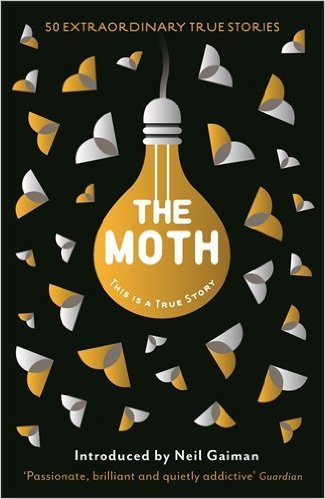
51pBVXbUFqL._SX323_BO1,204,203,200_The Moth: 50 Extraordinary True Stories

I’ve dipped in and out of The Moth podcast for years – it’s not one I’m subscribed to but I always enjoy it when I listen and when I was wandering around a book warehouse closing down there was a pile of these in the corner so nabbed one.  It’s a collection of stories told on The Moth – the creme de la creme, apparently – arranged into broad themes. Obviously some of the magic is lost when you the stories aren’t being delivered out loud but this is a really nice, light read and something you can dip in and out of.

The one overwhelming feeling I had while reading it though was that I haven’t lived. I haven’t got stories like these to tell, I still live in my childhood cul-de-sac and do the same routine everyday. Should I be living more? How do I do this? Am I meant to somehow arrange these often bizarre opportunities for myself, or wait for them to come to me? Obviously, being nineteen I *shouldn’t* necessarily have experienced life in all its forms and yet I did pine for some adventure while reading this book. I suppose that’s natural, but mentally speaking I’ve always been obsessed with the future. Every single moment I’m always thinking “will this make a good memory?” “will this make a good anecdote?” “how is this relevant to me in five or ten years?”. I haven’t got much of a past to dwell on, and my present is so boring that I can only sit and stew hoping the future will be better, more productive and more ‘fun’. Am I making excuses? Probably. The change starts with you, after all. We’ll see.

The Circle by Dave Eggers

I was going to write that this is clearly an important novel, but now I’m less sure. To Kill A Mockingbird is an ‘important’ novel, representing a slice of life that should never be forgotten. However, it’s set in the 1930s and was written in the 1950s (published 1960).

The Circle, on the otherhand, is an incredibly *relevant* novel. Only viewing it from a future perspective (here we go again!) would you be able to judge it as important, but I can easily imagine it being viewed in the same way George Orwell’s 1984 or Animal Farm are now. It’s set around San Francisco and the all encompassing and ubiquitous ‘Circle’ company which of course has many paralleScreen Shot 2016-03-27 at 15.00.56ls with Google, but combines elements of all our large technology corporations such as Facebook, Paypal and Amazon. It’s an odd one to try and place time-wise as Facebook is acknowledged but was at some point subsumed by The Circle, as I imagine were all the other companies.

Likes are smiles, dislikes are frowns, and posts are zings but everything feels very real throughout the novel. It’s all just one step away from where we stand now and as The Circle’s influence and power grows it questions our ability to almost be ‘brainwashed’, to accept things gradually and then wholeheartedly. Everyone is connected and people believe they have real influence – does ‘frowning’ against a far flung Government’s human right record help the issue? Circlers seem to think so.

For children growing up now they’ve never experienced a world without wi-fi, social media and easy access to knowledge and items online and a huge prevalence of internet connected devices. I grew up on the fringes – I’m older than Google, but remember a time at school where computers were still a commodity, and you used to huddle in groups around them to use Paint or PowerPoint. We didn’t get one at home until 2005 – I was 9, and it was an incredibly old model which a family friend was getting rid of – and I didn’t have home internet access until around 18 months later. Things were changing when I left, with the IT suites being completely overhauled and smart whiteboards and overhead projectors installed in every classroom.

And yet, I feel like technology has crept up on me and that it’s too late to turn back now. Of course, it *is* because so much of our daily lives relies on it but I’ve reached a point now where I don’t care. Some people obsess over our internet privacy, our lives being published for all to see and our data collected by firms. If I’d been worried about that to begin with I might have been more careful but now I have more online accounts than I care to remember (many of which lie dormant and forgotten, each company and site still holding my personal data and information) and more knowledge of my likes and preferences than I probably have. Algorithms and the like aren’t perfect yet of course, and neither are recommendations on streaming services and shopping sites, but they soon will be. It’s a reached a point now where I don’t care what I share and who knows what.

Although I rarely post on Facebook, The Circle encourages each of its users to be as active as possible – trolls can’t hide as each profile has a social security number and ID aligned with it, so there’s anonymity, and there’s rankings for your social performance. The way its presented in the book is initially hugely overwhelming, and as more screens and devices are given to Mae you feel breathless just reading it as she tries to keep tabs on everything that’s going on. However, she soon reaches a saturation point where she becomes used to it and doesn’t question its impact. That job lies with her ex-boyfriend and parents but Mae is oblivious to their warnings, she’s rising up The Circle chain and begins to have real influence on the companies direction. She believes that privacy shouldn’t exist, knowledge should be collective and everything accessible. Nothing should be deleted, everything exists in the cloud and is accessible and on record.

At each stage an argument is presented to show that The Circle’s next development is only seeking to improve our lives, to stop crime, expand democracy and help alleviate problems. It all seems reasonable, but its only when you take a step back you can see the true picture.

To think that The Circle was written four years ago seems astonishing – its ahead of its time, incredibly relevant and a must read. It acts as a warning but I doubt we’ll heed it.

A film adaptation is currently in the works.

Currently reading: The Man In The High Castle

Long reads & articles

A little light on these this month.

Zoe££a How Youtubers are stringing their fans along.

Copycat What do you do when you discover someone’s been republishing your books in their name?

In Man’s Image Imgur doesn’t get near enough as much press as other social media sites, but its community loves it. This traces its history.

Mulhernism Stephen Mulhern has been on telly for as long as I can remember, hosting CITV when I was a wee boy. I even had a Stephen Mulhern branded magic trick case, I seem to remember (?!)

The Readlist: February 2016

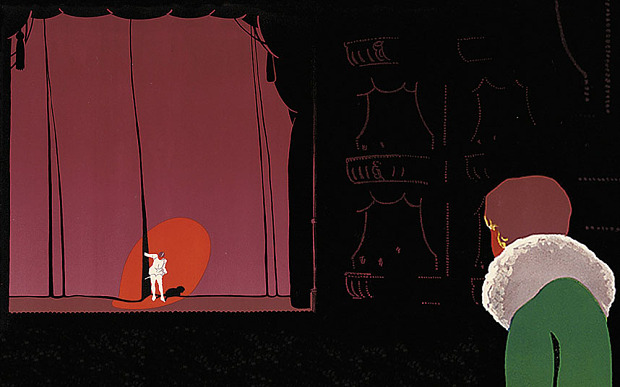
Curtain Call by Anthony Quinn

curtain_call_cover_3146972b

For years I’ve became lazy with my reading: I haven’t beem setting out to read something challenging, mainly due to time constraints, and often settled on some paperback bought in The Works. As a result I read a lot of crime fiction and I still have a soft spot for it. I had no awareness of Anthony Quinn before picking up this book on a whim in Waterstones Piccadilly but I’m glad I did.

It’s a classic crime story set in the 1930s with a serial killer on the loose in Soho who’s murdering prostitutes – and one gets away. Quinn manages to effortlessly weave numerous different strands of society into one, from a closeted homosexual to those in the middle classes via the sleazy world of the London working girl with the backdrop of pre-war London, fascism and anti-semitism. Indeed, you have sympathy for each and everyone of the main characters – something I never thought I’d say after the ending of Chapter 3 – and the storytelling passes between them.

This isn’t a crime story that has everything nicely wrapped up at the end but equally it doesn’t try too hard to be macabre either. Gentle enough to be a light read but heavy enough to keep you going – and in a change to the kind of books that I used to read from The Works, it’s nice to have the occasional word popping up that I don’t recognise. Quinn has clearly been influenced by classic crime fiction but manages to make his own mark on it. Well worth a read.

Bread by Ian Gregg

Popping into a charity shop for a vinyl hunt I stumbled across this book for 99p. It was released a few years ago and it’s part auto-biography, part business manual and charts the rise of chain bakery and indigestion giver Greggs. I find business history fascinating for some reason, particularly expansions and takeovers of other firms – I used to sit up at night reading Wikipedia pages for chain stores as a young teenager and can still recite to you the chequered history of most supermarkets. (I was soooo cool)

Greggs is still fairly new where I live – we were deep in Bakers Oven land, a slightly more upmarket brand Greggs took over in the 1990s. The products were slightly more expensive and the branches often had instore seating and bread baked fresh in store rather than delivered overnight. The differences between Baker’s Oven and Greggs faded as time went on and they opted to continue only with the Greggs name. This caused much anguish when I was at school and peers boycotted the new Greggs for all of two minutes as a result, even as I tried to explain the products were exactly the same and it had been Greggs in all but name for years. It’s recently been refurbished so no longer resembles a Baker’s Oven branch with the muted browns and big ovens in the shop.

Also: another chain bakery, Don Millers, closed their popular Queensgate store in Peterborough due to high rents. Who moved into the unit immediately after? Greggs. I’ve always wondered if they’ve been losing money being there. Anyway…

Gregg’s operated from vans to begin with, delivering baked goods to the housing estates around Newcastle and Teeside before expanding into shops and eventually baking their goods themselves rather than sourcing them from wholesalers. As with any business, it was near to crumbling at any point in the early shop days as they faced the difficult purgatory between having a small enough number of shops that they could easily manage (five, say) to expanding. With expansion you’d need a new bakery but in order to open that you need cash, and another ten stores to gain some return on it.

Greggs the BakersTakeovers of other local bakeries, often those that had been underloved and poorly managed for years, meant they were able to expand fairly quickly from the 1970s onwards. This is the most interesting part of the book as the company deals with their issues. As soon as it hits 2000 that’s when things start to get awry and the timeline jumps all over the place – indeed, the last quarter of the book is fairly incomprehensible.
It suffers from being a list of men at times – clearly Ian wanted to mention all those that helped shape the business, but page after page are dedicated to their life stories and I found myself skimming over numerous parts out of fear for my sanity.

There’s some interesting points here: Ian had no real knowledge of the business when he took over as his parents wanted him to pursue a ‘proper career’ so he went out researching to learn as much as possible. He claims this allowed him to expand strategically as he had no favouritism over particular parts of the business. If something needed doing he’d do it for the right reasons and wouldn’t bury his head in the sand but equally Greggs don’t go around screwing people over. Although they have just announced job cuts and closure of some regional bakeries.

Just by chance there’s a Guardian article at the moment that basically summarises the book: How Gregg’s conquered Britain and its refocus as a Food To Go chain over a traditional bakery.

Tender Is The Night by F Scott Fitzgerald

I’m currently around 2/3 of the way through this and thoroughly enjoying it after having my reservations to begin with. What I will say at this stage is that it’s remarkable that a book written in 1934 presents a better understanding of mental illness than many people have in 2016. More in next months Readlist.

LONG READS & ARTICLES

I’ve *finally* taken the plunge and subscribed to the New Yorker and get it delivered weekly direct from America. Surprisingly, the deliveries are quite speedy and the latest issue arrives every Friday just days after its release in the US. There’s something far more pleasant about reading it in its ‘true’ form over a screen like I have done for years.

Here’s some articles I’ve enjoyed this month…

INDEPENDENT’S DAY Archie Bland on what made working at the Independent special and the camaraderie and team spirit that those working on it had.

RICHARD AND MOODY Lowculture on the ridiculous headlines and stories in cheap celebrity magazines. My favourite story of the type was headlined ‘RICHARD: the night I wanted to kill myself’ and it was literally a story about Word crashing before Madeley could save a chapter of his autobiography. We’ve all been there.

ALWAYS CLEANING WINDOWS An old New Yorker piece on skyscraper window cleaners

PRISON BUS CRASH Buzzfeed on a horrific bus crash in America.

STANDING IN THE WAY OF CONTROL New Yorker long read on TMZ gossip website – does it have morals? Should it be praised? Interestingly one titbit from the article is that one of the original names bandied around during its creation was ‘Buzz feed’

WHAT, A PARK? Water parks at Disneyland might seem an odd thing now but when it first opened it was *the* big attraction, now slowly rotting away.

IT’S GETTING HOT IN HERE Gay saunas are an alien concept to me, like something from a by gone age though I understand their appeal in an age before apps. There was a documentary on gay saunas on C4 the other day, and the general consensus was it was a bit rubbish so read this article on one sauna’s final hours instead.

CORDENING OFF A CRIME SCENE I know this should technically be in March’s Readlist given the article date but this is a look at James Corden’s success in America. I’m still not entirely sure why the backlash over here in Blighty took place… maybe something to do with the many, many stories Popbitch write about him? Personally, I’m pleased at his success and I’m impressed at how he’s gone someway to reinventing the talk show wheel.

The Readlist: January 2016

When I was younger I would quite happily be able to sit all day on one of the steps on the stairs and read. Morning, noon and night it was all I ever did. Sadly life and work gets in the way when you get older but this year I’m aiming to read more and get back into it properly. It doesn’t help that my concentration is now no where near what it used to be but I’d like to read a book every couple of weeks which seems like a reasonable goal. It’s not like I wasn’t reading last year, but the problem is I’ve forgotten half the stuff I’ve read even though some of it (and in particular the non-fiction) was really great. Much like the watchlist, I’m aiming to keep tabs on my reading. There’s also a load of links to articles and long reads at the bottom. Here’s January’s offerings:

Dirk Gently: The Long Dark Tea-time Of The Soul by Douglas Adams

I bought a set of the three Dirk gently books ages ago after enjoying Hitchhiker’s and loving the Dirk Gently adaptation on BBC Four. I thought I’d never got round to reading the first one so started that only to then discover I’d infact read it last year but had very little recollection of it (cc the post opener). I then dived into Dirk 2. It was an alright read, a little ploddy and slow in places but with enough interlinking layers to make it an interesting story. I found the ending a really disappointing pay off however, and it (without bdirkeing too dramatic) ruined the book for me. Other points:

  • One of the running themes in the book is the fact that you can’t get pizza delivered in London even though it’s a staple of any decent American town: a little dated.
  • There are certain people you know would have been brilliant on twitter but they’re sadly rotting in the ground and Douglas Adams is very definitely one of those people.
  • I’d recommend watching the Stephen Mangan dramatisation of the Dirk Gently books. They don’t follow the stories and are merely based in his world instead, but they’re really great. They pop up on iPlayer from time to time, otherwise grab the DVD. The soundtrack to it is great too.
  • Also, BBC America announced this month they’d be making a Dirk Gently TV series which makes me incredibly fearful as I presume it’s going to be very Marvel-ly in its way. We shall see.

Room 536 by AL Kennedy (short story)

A book warehouse to the trade closed near me not too long ago and had a public closing down sale and I spent two happy hours browsing the place. One of the things I picked up was an old edition of Granta and this story was in it. It’s brilliantly told, and is like peeling back the layers of an onion – you never know what’s going on and then little by little something new is revealed. It’s incredibly witty too. Alas, it never became a proper novel as intended and left me with many more questions than answers.

The Error World by Simon Garfield

I’m a big fan of Simon Garfield and have read a few of his books and his inside account of Radio 1 in the late 1990s is well worth grabbing a second hand copy of, particularly if you work in radio. Without getting all James Ward on your ass I do find a fascination in the “boring”, “dull”, everyday things that most people don’t give a second thought to. It also annoys me when people look down on those who collect things or have a great knowledge of specific items as if that’s really any different to being able to name every player in the Chelsea squad.

In this book, Garfield talks personally on one of his passions: stamp collecting, and in particular error stamps. This is one of the only worlds where the more incorrect, and ‘damaged’ an item is, stamps.pngthe more it’s worth. These are usually down to rare printing errors where the Queen’s head is missing, or a specific part of the design has not been printed. He talks about his search for certain stamps which he’s been longing for since he was a child and the eventual strain it had on his marriage. TEW is an incredibly personal book – less about stamps and more a memoir of Garfield’s life, the deaths that shaped him as a young man and the mistakes he acknowledges he’s made. This is one of Garfield’s great strengths, being able to present these subjects that most would describe as “dull” in an incredibly human way.

There’s lots of interesting titbits in the book as you’d imagine, but one that’ll stick with me is that the first Christmas stamp was based on a muslim! It was designed by a child who entered a Blue Peter competition and based the king’s face on her father. I’m sure Daily Mail readers would be thrilled by that knowledge. Also, Serena Williams is a philatelist – who knew?

Tintin: Cigars of the Pharaoh

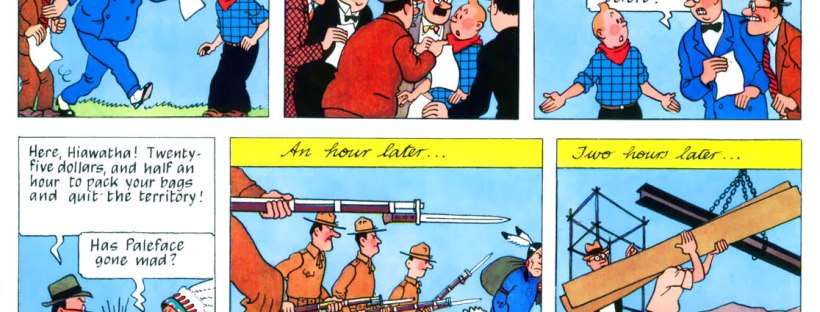
I bought a complete set of Tintin on a whim last November and have been making my way through them when I have a spare moment or when I’m between books. They’re always very fast paced but the attention to detail in each slide is astonishing. This page from Tintin In America which I read last month doesn’t avoid political issues.

tintin-in-america-pp29

…and I’m currently reading Curtain Call by Anthony Quinn

LONG READS & ARTICLES

QUBE The interesting story of the first cable network in America, called Qube. It was interactive (!) and is largely forgotten.

Railways The most unusual stations on the British rail network

Stand On The Right Why challenging the status quo on the Underground has benefits

Stream Me Up, Scottie Why streaming TV isn’t just TV delivered differently

Tuchman You’ve never heard of him but you’ve seen him

Droning On How a Kickstarter campaign went awry and lost £££s for investors

Making A Mistake How Making A Murderer isn’t as clear cut and well made as thought

Whitney How Whitney changed America’s national anthem

Ad blockers The future of news on the web and what Forbes did about it

Bye Jazeera The real reason Al Jazeera US failed

Bernie NRA Sanders How the NRA accidentally elected their enemy